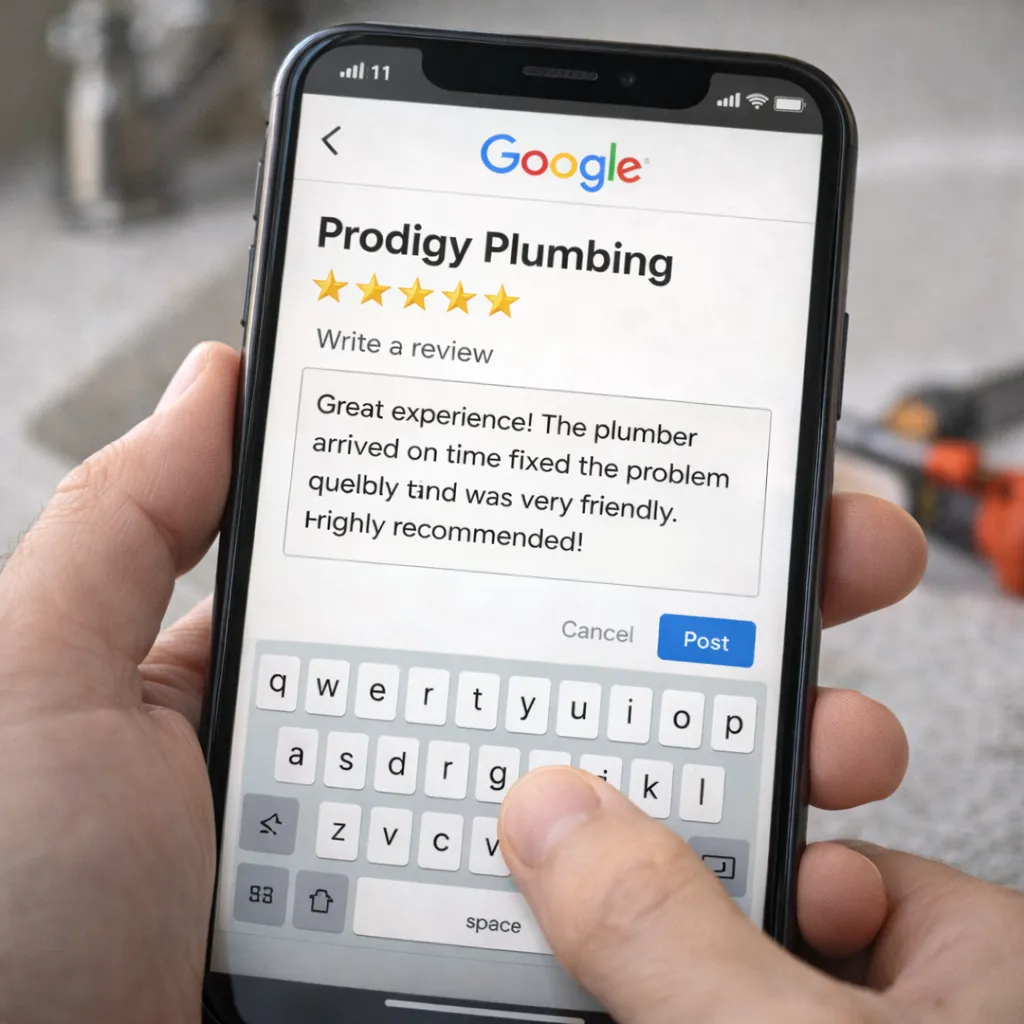
Perfect Timing: When to Ask for a Review to Get the Highest Response Rate
Timing Is Everything
The difference between a 10% review response rate and a 45% review response rate often comes down to a single factor: when you ask. Same customer. Same technician. Same message. The only variable is timing — and the impact on response rate is enormous.
Most home service businesses either ask at the wrong moment or wait so long that the moment has passed. This single mistake costs more reviews than any other factor in the industry. Let’s break down exactly when to ask, when to wait, and how to use timing as a competitive weapon.
The Golden Window Concept
Every completed home service job creates a short emotional window where the customer is acutely aware of the value you just provided. The AC is blowing cold again. The drain is clear. The electrical problem is fixed. Relief, gratitude, and satisfaction are all at their peak.
This window is narrow. It starts the moment the job is completed and begins decaying within a few hours. By 24 hours later, the experience has already begun fading into normal life. By three days later, the customer would need a direct reminder to even remember what you did. By a week, the emotional weight is essentially gone.
The data bears this out: review requests sent within two hours of job completion see response rates of 35–50%. Requests sent 24 hours later drop to 20–25%. Requests sent a week later hover around 8–12%. Requests sent a month later perform worse than cold outreach to strangers.
If you want 5-star reviews, you need to ask inside the golden window. Everything else is just friction.
The Two-Hour Rule for Home Services
For home service businesses specifically, the optimal window tends to cluster around 1–3 hours after job completion. Here’s why:
Before one hour is actually too soon. The customer is still processing the job, maybe talking to a spouse, maybe getting back to work, maybe paying the invoice. A review request in this phase can feel like rushing them out the door.
After three hours begins to lose emotional freshness. Life has resumed. Other priorities have re-emerged. The specific memory of the positive experience is already dimming.
The sweet spot — roughly 60 to 180 minutes post-completion — catches the customer when they’ve had time to experience the result, appreciate it, but haven’t moved on mentally yet. This is when SMS review requests convert at their highest rate by a wide margin.
If you’re using automated review requests, set the delay to approximately 90 minutes after job completion. This threads the needle almost perfectly for most service types.
When Delayed Asks Actually Work Better
There’s one major exception to the two-hour rule: multi-day installation projects or jobs where the customer needs time to verify the work is actually holding up. For example:
- A new HVAC system where the customer needs a few cooling cycles to confirm it’s working properly
- A water heater install where the customer needs to verify hot water output over normal use
- A major electrical upgrade where full functionality is only evident after a day or two of use
For these jobs, a delayed ask at 48–72 hours post-completion often outperforms the immediate ask. The customer has real-world confirmation the work was successful, and their review will be more specific and enthusiastic as a result.
The key is matching the ask to the evidence cycle. Ask when the customer has enough information to feel confident in their assessment, but not so late that the experience has faded.
Day-of-Week and Time-of-Day Patterns
Beyond the golden window, day and time matter more than most businesses realize:
- Tuesday through Thursday generally produce the highest review response rates
- Monday mornings are poor — customers are catching up on their week and ignoring non-urgent messages
- Friday afternoons and weekends see reduced response rates because customers are in leisure mode
- Evening hours (6–9 PM) often outperform midday hours for residential customers who are home from work
A job completed Tuesday at 2 PM with an automated review request sent at 3:30 PM is hitting peak conditions. A job completed Friday at 5 PM with a review request sent Saturday morning is fighting against every timing factor simultaneously.
The good news: automation handles this perfectly. A well-configured system can be set to pause requests during low-response periods and release them during peak windows automatically, increasing response rates without any extra effort.
Timing to Avoid at All Costs
A few timing scenarios will burn you:
- Immediately after a difficult job where the customer expressed frustration, even if resolved — let the emotional temperature cool
- During a complaint or callback — never ask for a review while a customer is airing a concern, even if you resolved it in the same call
- Holidays and major community events — customers aren’t thinking about review requests on Christmas morning or during the Super Bowl
- Late at night (after 9 PM) or early morning (before 8 AM) — feels intrusive and hurts brand perception
- Directly after payment collection — can create the perception that the review is part of the transaction
The golden rule: ask when the experience is fresh, the customer is relaxed, and there’s no pending concern or unresolved issue. Every other time is suboptimal.
Automating Timing So You Never Miss It
The reality for most contractors: nobody is going to remember to manually send review requests 90 minutes after every job completion during business hours on Tuesday through Thursday. It’s just not going to happen consistently, no matter how disciplined your team is.
This is where automation earns its keep. An automated system triggered by job completion in your dispatch or CRM software can:
- Send the request at the optimal delay (typically 60–120 minutes post-completion)
- Pause requests during off-hours and release them during peak windows
- Follow up automatically at 24 and 72 hours if no review is received
- Stop sending the moment a review is detected
- Adjust timing by customer type, job type, or service category
Once configured, the system handles timing perfectly on every single job without any human remembering or deciding. The response rate stays consistently high, and the review flow becomes as predictable as billing.
Making Timing Your Competitive Edge
Most competitors are still asking at terrible times, if they’re asking at all. They send requests on Sunday mornings, a week after the job, from a generic no-reply email address. Their response rate sits at 5–8% and they can’t figure out why reviews aren’t coming in.
Dialing in your timing alone — same customers, same message, better moment — can triple your review flow. Add automation so it happens consistently, and you’ve built a compounding advantage that gets bigger every month while competitors stay stuck.
Timing isn’t the only factor in a successful review system, but it’s the biggest lever you can pull. Pull it hard, and watch what happens.
More Reviews. More Revenue. Zero Manual Work.
Every review you miss is a customer going to your competitor. Reviews Dominator handles the entire review lifecycle — from request to response to remarketing — so you never lose another opportunity. Schedule a demo today →
